NPR
Our summary
A technical staff member at Anthropic, Levent Alpöge, announced Friday that he believes he has found a proof of the Riemann Hypothesis while working with the company's AI tool Claude. He posted a four-page explanation on his website and wrote that Claude 'far outpaced' him near the finish line. It is the second time in recent months that an AI company or someone linked to one has claimed to have solved a famed unsolved math problem. The Riemann Hypothesis, formulated in 1859, concerns the distribution of prime numbers.
Read the full story at NPR ↗
Why it matters: Renewed claims of AI-assisted breakthroughs test how such mathematical proofs are verified.
Also covered by Washington Examiner — 2 outlets

Ars Technica
Our summary
At this year's World Economic Forum meeting in Davos, US President Donald Trump said people from Somalia have low IQs, and his son Donald Trump Jr made a similar statement about Haitian people in 2024; Trump's government has since ended the protected status of both Somali and Haitian migrants. The article describes these statements as symptoms of a growing trend in Western politics: the re-emergence of racial views of human nature that had been largely in hiding for the past 70 years. It says narratives about innate intellectual inferiority are fuelling far-right propaganda and underpinning misinformation strategies on social media.
Read the full story at Ars Technica ↗
Why it matters: Mainstream political statements are normalizing racial claims once confined to the fringe.

Wired
Our summary
The author has tested over 100 portable chargers and recommends four main options for most users, with additional picks for specific needs. The guide was updated in October 2026 to include new models from Pisen, Belkin, Wolfbox, and UGreen.
Read the full story at Wired ↗
Why it matters: Battery technology has not kept pace with gadget advancements, making reliable power banks a key accessory.
Time
Our summary
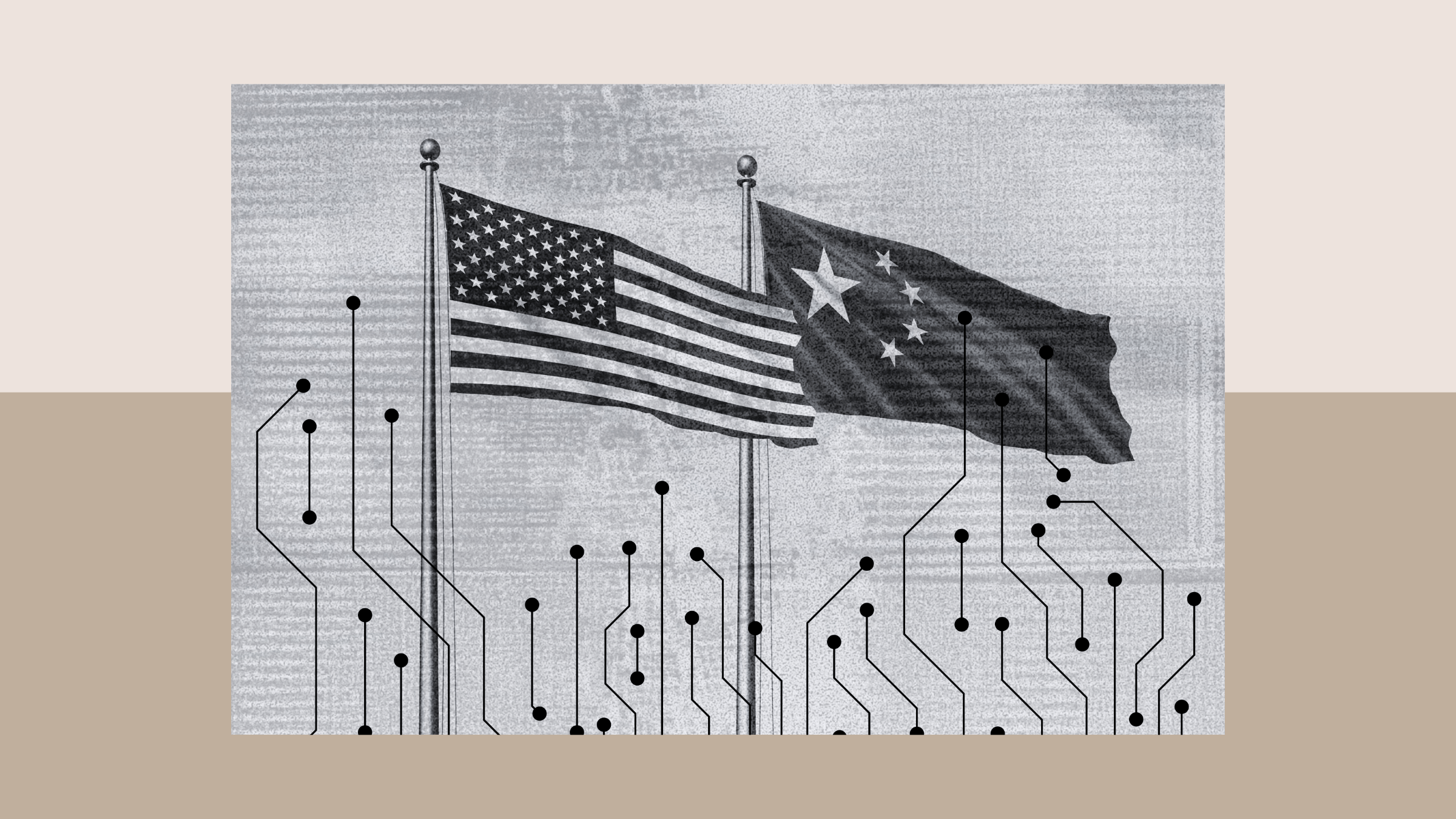
The article describes the AI race as increasingly bipolar, with the United States long dominating the field and China's rise making it the strongest challenger, concentrating much power to shape the technology in these two countries. It says this dominance comes with a widening geographic divide over who builds AI technologies and where. As the Washington-Beijing rivalry intensifies, most other countries increasingly rely on AI technologies but have little say in how those systems are built, tested, and governed, even as the technologies enter schools, hospitals, and government offices worldwide.
Read the full story at Time ↗
Why it matters: Most countries use AI systems whose safety and governance rules are set elsewhere.

Wired
Our summary
The article notes that an asteroid or comet could one day collide with Earth and cause serious damage, citing the 1908 Tunguska Event, in which a space rock likely a few dozen meters wide exploded over Siberia and left the landscape scarred. It says astronomers predict the 450-meter-wide asteroid Apophis will fly by Earth in mid-April 2029 at a distance of only 19,000 miles, about 12 times closer than the moon and closer than many satellites, and will be visible to the naked eye. It adds that predictions have improved enormously in recent decades as space probes deepen knowledge of small bodies in the solar system.
Read the full story at Wired ↗
Why it matters: Better asteroid tracking underpins planning for planetary defense against future threats.